SEO Content Strategy for the New Year
Why your content strategy matters, and how to create one.

Developing and refining your site’s content is the kind of un-sexy task that pays dividends longterm. Optimizing for SEO isn’t a magic bullet, but future you will be super grateful in six months to a year when you start seeing organic search traffic coming in because of content you posted this week. That’s why creating a content strategy makes a great project for the top of the year: you’re going to want to develop a strategy, then bake it into your weekly and monthly to-dos so that you start to see results longterm.
The main type of content I’ll be focusing on today is long form, which will do the most for you as far as generating organic traffic.
Why is long form content good for a site’s SEO?
Any type of relevant, helpful, keyword-rich content that you add to your site is useful. However, Google’s search formula rewards long form content (1000+ words) for a few reasons:
Long content keeps visitors on your site longer
More copy gives Google more data to crawl, helping them to better categorize your site and optimize it in search results
High-quality, comprehensive content tends to generate more (and better) backlinks
Writing quality content is the number-one most important thing you can do to improve your site’s SEO. If you’ve ever clicked into an article that you hoped would be helpful, only to find it was essentially just word salad, you’ll know what I mean. Good content keeps people engaged with your site, which helps boost your site’s authority. I want to reiterate that developing a content strategy isn’t a magic bullet solution - this is about creating useful content over time so that you can increase your search results in the next six months to a year, and beyond.
I’m convinced! How do I create an SEO-informed content strategy?
Step #1 - Complete some keyword research.
Keyword research is the process of identifying the strongest words and phrases you can use to capture Google’s attention. Your brand’s main offerings will be the jumping-off point for keyword research. To get started, come up with a short list of the main concepts related to your brand, expressed as short phrases. For example, some of Reformation’s keywords might be:
Bridesmaid dresses
Wedding dresses
Sustainable women’s clothing
Vacation dresses
Carbon neutral fashion
If your brand has existing name recognition - like Reformation - then you’ll also want to include the name in some of your initial searches, like “Reformation dress.”
Once you’ve compiled that list of essential phrases, which are called your seed keywords, it’s time to do research on each. The goal at this stage is to expand your list to include any phrases or keywords that get high search volumes in Google. You may also find, as you research each of your seed keywords, that other phrases begin to appear that you want to capture. This is good: keyword research is all about exploring your options.
Here are the best keyword research tools to use for free (or with a free trial):
Moz or SEMRush: these are the top two SEO platforms, and both offer free trials. Since these platforms are so in-depth, I’d recommend starting a free trial and pulling all the data you need for the year ahead.
Google Keyword Planner: this does require a credit card to be input, although you’ll only be charged if you enable a paid ad campaign. It’s a little less intuitive of a platform than Moz or SEMRush, but there are tons of explainers online.
Wordsteam free keyword tool: this is the most bare-bones option, but it’s totally free.
As you start to research, remember that you’re looking for keywords with both specificity and relevance, not just total search volume. For example, if you’re Reformation, you’ll likely see “women’s dress” gets the most search hits of any relevant keyword. That’s all well and good - and you can certainly include the phrase on your site, I won’t stop you - but is it specific enough to actually be useful? Likely not. Your goal is to strike a balance between the broad and the brand-specific so that you capture the right organic traffic.
Pretty soon, you’ll have compiled a list of tons of keywords. Now that you’ve generated this data, remember: your goal isn’t to jam as many relevant keywords as possible into your content (like those word salad articles that we’ve all come across). Only use keywords that are relevant and fit into the (hopefully good) ideas that you want to get across. Here are the best way to utilize those keywords you pulled:
As replacements for phrases you were already going to use. For example, let’s say you’re writing a blog post on how to source ethically made bridesmaid dresses. You may search “ethically made bridesmaid dress” as a keyword and learn that “sustainable bridesmaid dress” ranks higher. Great! Let’s use that phrasing instead, since Google will likely reward it.
In headers. Google hones in on any copy that you designate as a header to help them make sense of your content. Headers don’t just help Google, though - they also help readers who may be skimming your article. Make sure to include relevant keywords in your headers as often as possible. (Again, we’re never going for repetitive word salad.)
For example, let’s say you’re still working on that article about bridesmaid dresses. Rather than using “Sourcing Tips” as a header, make sure to really spell out the content for Google with something like “Bridesmaid Dress Sourcing Tips.”
As inspiration for new, relevant content. More on that in step #2:
Step #2 - Start compiling your keyword research into topic ideas.
Your content should be as unique as your brand is, but hopefully by now you’ve started noticing patterns around useful content you could create. I’d recommend grouping your keyword research into relevant groups based off of your product offerings or services so that it’s easy to reference. (This is a great moment for a spreadsheet!) From there, it’s time to start the (hopefully) fun and creative part: brainstorming new content.
Need some help coming up with content ideas? Here are a few things to consider:
Can you phrase a keyword or phrase as a question, and then answer it? Continuing with Reformation as an example, a prime question to answer might be: “How are we reducing carbon emissions in 2023?”
Are there are content gaps on your site that your direct competitors are covering? Maybe you’re a small skincare brand and you notice competitors are writing long form blog posts on their product’s formulations. Use competitor research as a way to identify and fill in those gaps.
Step #3 - Get writing!
This is pretty self-explanatory, but it bears saying: all the SEO optimization in the world won’t help you if you aren’t creating useful content. Your goal should always be to create content that helps your customers in some way. Maybe that’s by providing the best information possible so that they can make informed purchases, or by inspiring them with your brand’s story, or by explaining how to use or style your products. You’ll need to come up with the right answers for your unique brand. Just remember, if you are creating content from a place of helpfulness, I can guarantee you’ll see better SEO results even if your keywords aren’t perfectly optimized. Come up with a creation cadence that feels doable for you, and get writing.
Where should I be aiming to add this new content on my site?
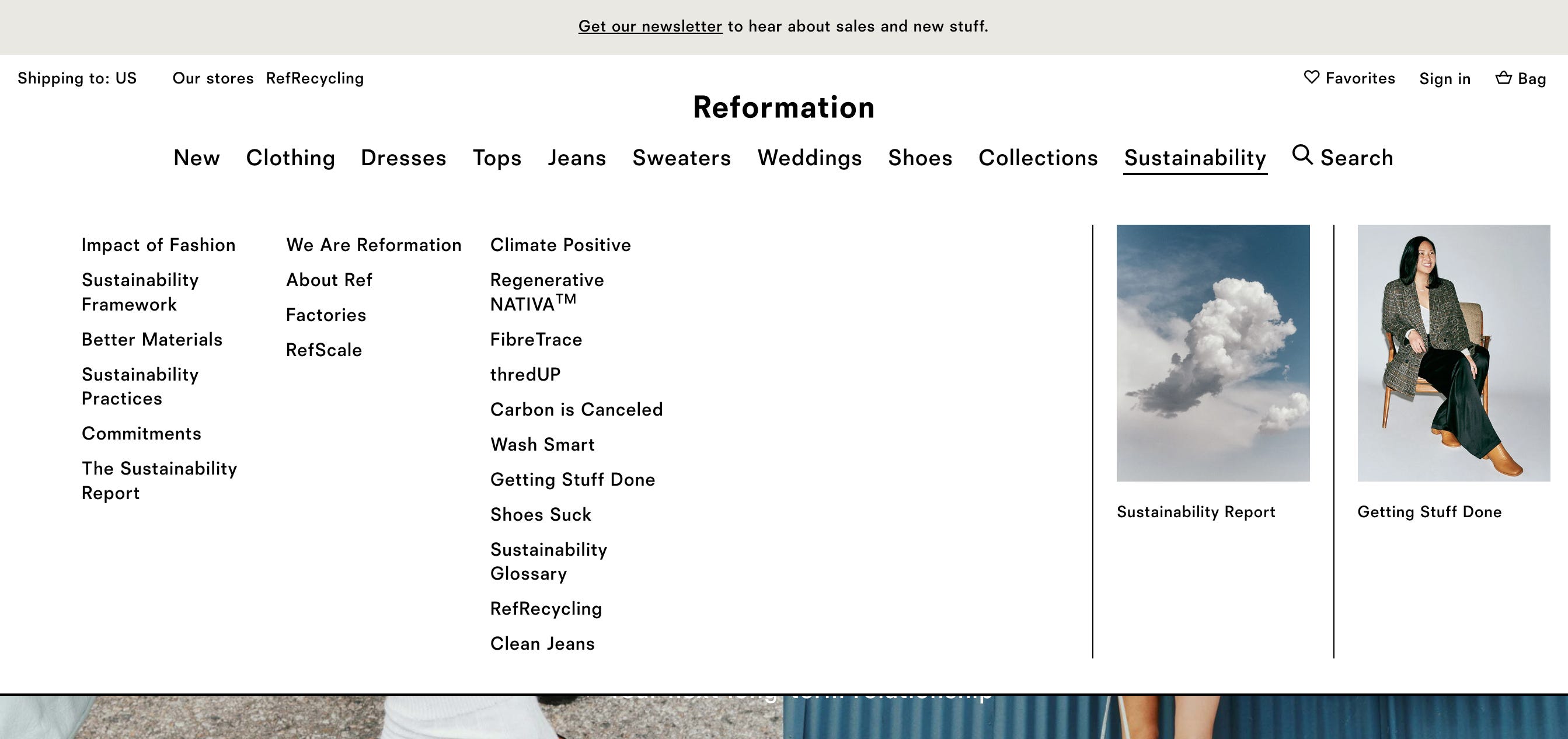
Blogs are a natural fit for this type of keyword-rich content, and I think every fashion/beauty/home goods brand would do well to have one on their site. But you have other options, too:
About the brand/brand story pages
Look Book pages
Sustainability pages
How to style/how to use guides
When in doubt, check what your competitors are doing - and aim to do better. Remember, if your existing customers aren’t interested in reading every page of content, that’s fine! Your goal with all of this content creation is to help capture new, relevant organic traffic. If your current customers read and enjoy it, too, that’s the icing on top.
Anything else I need to know?
Google rewards sites that refresh their content regularly. As part of your strategy for the year ahead, set yourself reminders to come back to key pieces of content and update them in some way, even if it’s small. Can you add a new, relevant link? A couple of additional sentences? Anything counts in Google’s eyes - they just like to see that your site isn’t stagnant. If this feels overwhelming, prioritize which content to refresh based on your site’s page traffic. It’s always the most impactful, SEO-wise, to tweak and expand on your most popular blog post, rather than a page no one actually reads.
Whew! That was a long one. I hope this was a helpful introduction, especially if you feel overwhelmed or confused by SEO. If you have any questions, smash that reply button and reach out!
Want to learn more? Interested in working together? Get in touch with me here.